Wine clubs are the single most valuable revenue channel for most DTC wineries. They drive predictable recurring income, deepen customer loyalty, and create the kind of long-term relationship that turns a one-time tasting room visitor into a decade-long buyer.
Every winery operator knows this. So why is it still so hard to run a wine club on Shopify?
The Problem Nobody Has Solved
If you're a winery on Shopify — or thinking about moving to Shopify — you've probably hit this wall already. Shopify is the best ecommerce platform available. The checkout converts. The storefront is beautiful. The integrations are endless. But when it comes time to run your wine club, your options narrow fast.
You can use a generic subscription app. Recharge, Bold, Seal — they're built for monthly snack boxes and vitamin deliveries. They work on a simple recurring model: charge the customer the same amount on the same schedule, ship the same product. That's fine for protein powder. It's not how wine clubs work.
Wine clubs are release-based. The winemaker picks the wines. The shipment changes every quarter or every season. Members might get a customization window to swap bottles before the shipment goes out. Pricing can change based on what's in the release. Some members skip. Some are on hold. Some are in a premium tier with different allocation. None of that maps cleanly onto a generic subscription model.
You can also use one of the wine-specific club tools that have started appearing in the Shopify ecosystem. A couple are genuinely trying to solve the problem. But most of them require Shopify Plus, or they don't integrate with compliance, or they treat club management as an island — disconnected from your store, your POS, and your tasting room data.
Or you can stay on a legacy wine platform specifically because it handles clubs. We talk to wineries doing this all the time. They love everything about Shopify except for the club gap. So they stay on Commerce7 or WineDirect, giving up the storefront, the integrations, and the commerce engine — because the club tools are there.
That trade-off shouldn't exist.
Wine Clubs Aren't Subscriptions
This is the core insight that most tools get wrong. A wine club looks like a subscription from a distance — recurring charges, recurring shipments. But the mechanics are fundamentally different.
In a typical subscription, the customer chooses a product, sets a frequency, and the system charges and ships on autopilot. The product is the same every cycle. The price is the same. The customer is in the driver's seat.
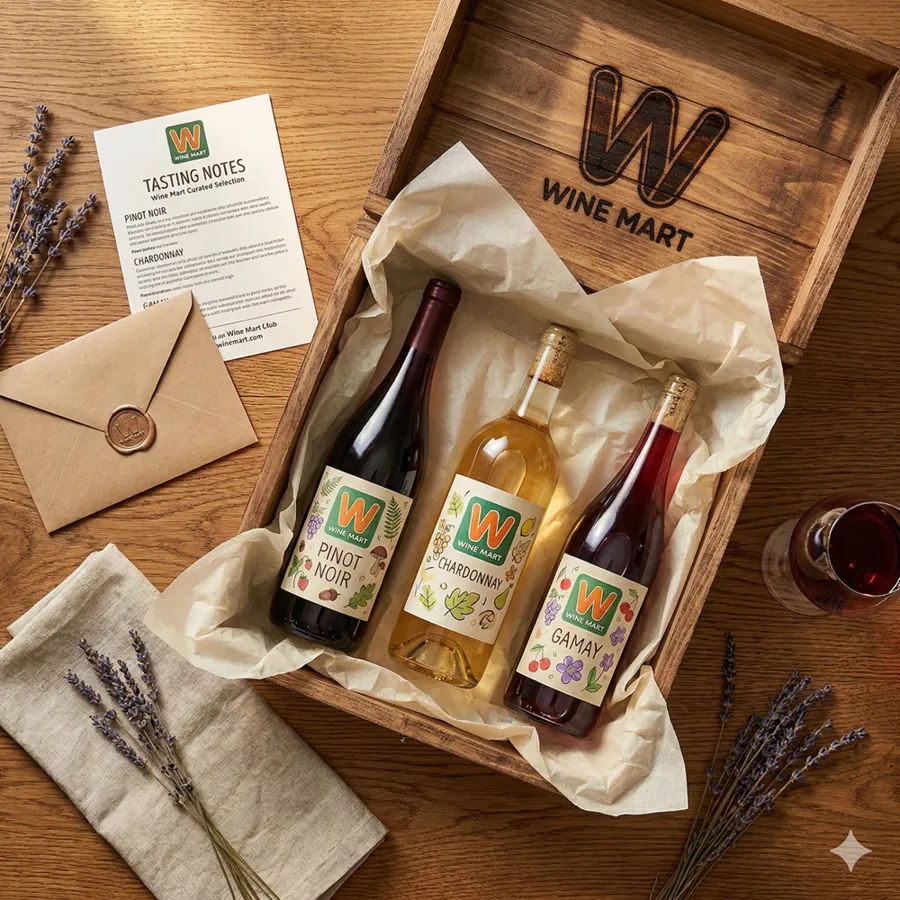
In a wine club, the winery is in the driver's seat. The winemaker curates each release. The shipment might be three bottles of the new Pinot Noir and one bottle of the reserve Chardonnay — and that combination changes every cycle. The billing happens when the winery says it's time to bill, not on a fixed calendar. Members might get a window to customize their selection before the deadline. And the entire process needs to be compliant — state-by-state shipping rules, alcohol taxes, age verification — on every single club order.
Try shoehorning that into a subscription app built for monthly sock deliveries. It breaks immediately.
And it's not just about release clubs. Some wineries — especially those targeting younger buyers — want to offer a build-a-box model where the customer picks their own wines at their own cadence. That's closer to a traditional subscription, but it still needs wine-specific features: compliance integration, variable pricing based on bottle selection, flexible frequency options, and the ability to let members edit their box before each renewal.
The market needs both models — curated releases and customer-built boxes — running on the same infrastructure, sharing the same member data, with compliance built into every transaction.
Clubs Can't Live on an Island
Here's the other thing that frustrates us about how club tools typically work: they're disconnected from everything else.
Your wine club is not a standalone business function. It's connected to your compliance rules — every club shipment needs to follow the same state-by-state regulations as your retail orders. It's connected to your tasting room — that's where most members sign up. It's connected to your online store — club members shop between releases, and their purchase history should inform how you curate their shipments.
When your club tool is a separate app with its own database, none of that integration happens naturally. You end up with club members who are strangers to your store's customer profiles. You end up with club shipments that don't flow through compliance checks. You end up with tasting room staff who can't see whether a visitor is already a member.
This is the problem we kept seeing — and it's why we couldn't just build compliance and stop there.
Why We're Building CrushSuite Clubs
When we launched CrushSuite Compliance, we made a deliberate architectural decision: we built it on a data model that anticipated clubs and tasting room bookings from the beginning. Compliance wasn't designed as a standalone product. It was designed as the foundation of a suite.
That means when Clubs launches, your compliance data and your club data already live in the same system. Club shipments flow through the same compliance engine as your retail orders — same state rules, same compliance fees, same age verification. There's no integration to configure, no data mapping to maintain, no third-party handshake to troubleshoot.
We're building Clubs to support both models wineries need. Release clubs for the traditional winery model — winemaker-curated shipments, scheduled releases, customization windows, batched billing. And bundled subscriptions for the modern model — customer-built boxes, flexible frequency, dynamic pricing based on what they select.
Both club types share the same member infrastructure. A member who started with a build-a-box subscription and later upgrades to the reserve allocation club? Same customer record. Same compliance data. Same unified profile across your entire CrushSuite ecosystem.
And because it's all built on Shopify's native subscription infrastructure — not a custom billing system bolted onto the side — your club data lives where the rest of your Shopify data lives. Club members show up as Shopify customers. Club orders show up as Shopify orders. Your POS, your marketing tools, your analytics — they all see club activity natively.
No Shopify Plus required. No redirects. No separate dashboards.
What This Means for Wineries on Shopify
The club gap has been the last major reason wineries hesitate to move to Shopify — or the reason they leave features on the table after they've already moved. We're closing that gap.
CrushSuite Clubs is in active development. We're building it the same way we built Compliance — deliberately, with deep integration, and with the specifics of wine club operations driving every design decision.
We don't have a launch date to share yet. But if you're a winery on Shopify that's been waiting for club management that actually understands how wine clubs work — or if you're on a legacy platform holding on specifically because of clubs — we'd love to keep you in the loop.
CrushSuite Clubs is live on the Shopify App Store with a 14-day free trial.